
Behind the Process of the Martin the Mouse Series with Richard Ballo
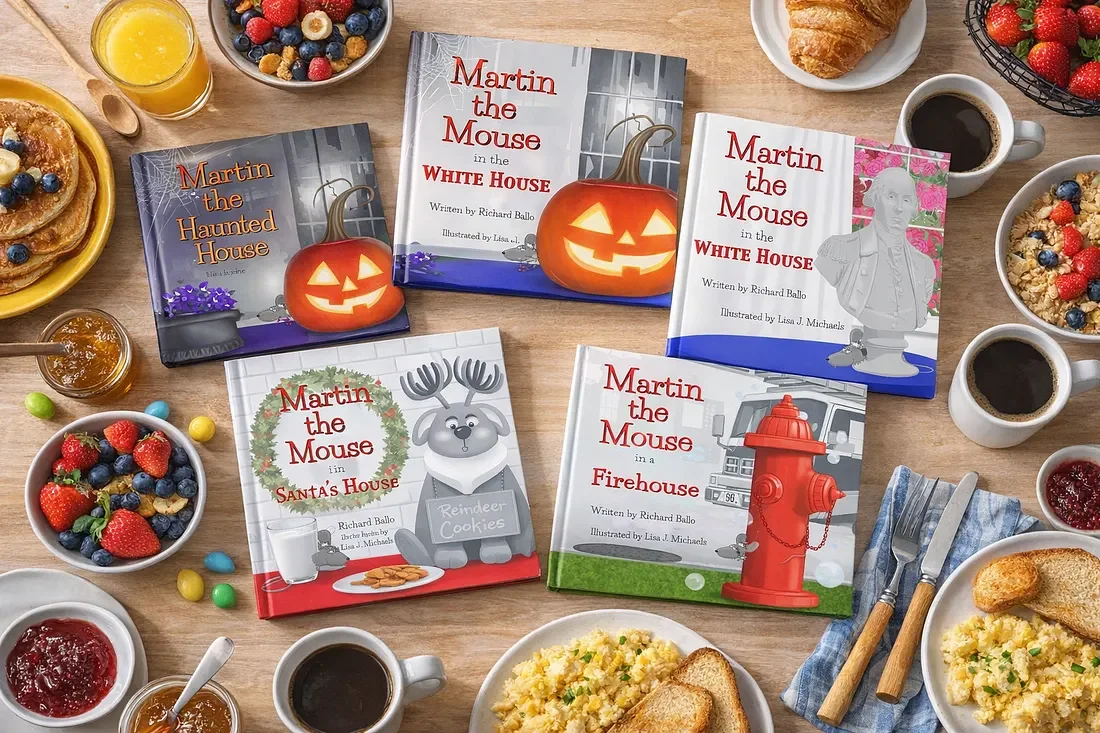
Children’s books often leave a lasting impression, blending imagination with meaningful life lessons in ways that resonate long after the final page. In the beloved Martin the Mouse series, author Richard Ballo brings readers into lively, relatable settings where a small, mischievous mouse sparks big adventures — and even bigger lessons. Through humor, fast-paced storytelling, and vibrant illustrations, Ballo creates stories that both entertain and inspire young readers.
In this interview, he shares the creative process behind Martin’s world, the inspiration drawn from real life, and the thoughtful themes woven into each story that encourage empathy, curiosity, and problem-solving.
What originally inspired you to create the character of Martin the Mouse, and how did his personality take shape?
I wanted to create a character that was small, like children, and unknowingly gets into trouble, much like small children do. Martin also acts as a catalyst to make the child in the book the solver of problems. In the first book, Martin in the White House, the child is the one who solves the problem of getting the mouse out, while the politicians simply take the credit.
When developing each new adventure for Martin, where do your ideas typically come from — real-life experiences, imagination, or a mix of both?
The ideas for each book begin with real life, and then I use imagination to build the story. This allows kids to see familiar environments they can relate to, while also enjoying imaginative scenarios. I picture the rooms in the house and choose ones that will create visual and word-based comedy. Martin is always chased by a cast of characters who live and work in the house, and while those characters change, Martin, the child, the reporter, and a pet remain consistent.
How do you decide on the themes or lessons you want each story to convey to young readers?
The main lesson I want children to learn is that they can protect creatures smaller than themselves. If a child is being picked on, I hope they learn to protect others and break the cycle of bullying. There’s also a background theme about careers, showing different people at work and how they collaborate, which can inspire children to imagine what they might want to do in the future.
Can you walk us through your writing process from initial idea to finished manuscript for a Martin the Mouse book?
First, I imagine the type of house that will serve as the setting for the chase. Then I choose the child who first sees Martin, alternating between male and female characters. From there, I develop additional characters, their personalities, and how Martin affects them. I include notes for the illustrator to guide the visual storytelling. Once the manuscript is written and edited, it’s ready for illustration.
How do you balance creating an engaging adventure while still keeping the story age-appropriate and easy to follow for children?
I choose interesting settings that capture children’s attention and use age-appropriate language. The storyline is simple — a child and others chasing a mouse — which keeps it easy to follow. The child remains the central character, grounding the story in relatable themes. I also collaborate with the illustrator to ensure the visuals are engaging and help the story flow naturally.
Do you visualize scenes or settings first, or does the storyline come to you before the imagery?
The setting always comes first. I use it as the foundation to build everything else. From there, I create scenes within the house where the action and resolution take place. I see the storyline from beginning to end and develop the chase in a way that highlights both the action and the background details.
How involved are you in the illustration process, and how do you ensure the visuals align with your vision for Martin’s world?
I’m not heavily involved in the illustration process, but I do provide guidance and give the illustrator creative freedom. I review each illustration to ensure our visions align. I’ve worked with the same illustrator across the series, so we understand each other well. Sometimes the artwork even inspires changes in the text — for example, adding “Aurora Borealis” after seeing a beautiful illustration of the northern lights.
Have any of the characters or storylines evolved in unexpected ways as the series has grown?
Yes, the main child character alternates between a boy and a girl, and they not only solve the problem but also become defenders of Martin. The reporter character has also evolved — she’s always reporting on events and is dressed for the occasion. In later books, like the Haunted House, her role expands, and she begins transitioning toward digital media.
What challenges have you faced when writing for a young audience, and how have those challenges shaped your approach?
The biggest challenge is remembering that the audience is young. Since I also write for adults, I have to shift my mindset. I think back to what captured my children’s attention and also read to first and second graders to understand their reactions. Humor, like silly moments, still resonates, but it’s important to maintain a sense of innocence, wonder, and discovery.
What advice would you give to aspiring children’s book authors who are trying to bring their own imaginative characters to life?
Keep your target age group in mind — typically ages 3 to 7. Focus on a strong, relatable emotion and a problem the child can solve within 300–600 words. Think visually and use concrete language. Pay attention to pacing, making each page turn invite new action. And remember, you’re writing for both the child and the adult who will read the story to them.
Richard Ballo’s approach to storytelling highlights the power of simplicity, imagination, and heart in children’s literature. By centering his stories around relatable settings and empowering young characters, he creates narratives that both engage and uplift. The Martin the Mouse series not only entertains with its playful adventures but also reinforces meaningful lessons about kindness, courage, and standing up for others. For aspiring authors and readers alike, Ballo’s insights serve as a reminder that even the smallest characters can spark the biggest impact — especially when stories are told with authenticity, humor, and a deep understanding of the world through a child’s eyes.
